Book Review: "Star Wars: Reign of the Empire - The Mask of Fear"
Sunday, January 18th 2026
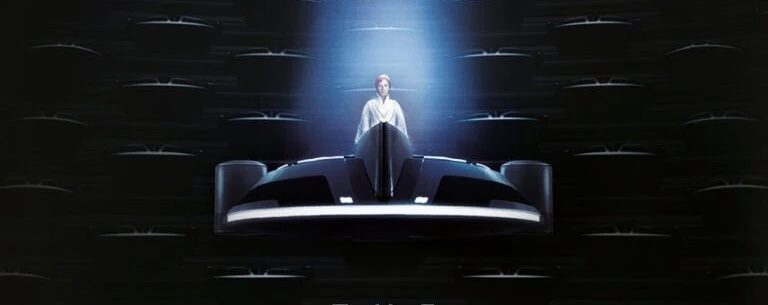
I recently finished reading a novel about the early days of a brutal dictatorship, and the different ways that justice-oriented individuals under its rule choose to resist. It’s a morally complex (and unfortunately timely) story touching on themes such as the futility of self-righteousness in the face of unabashed hypocrisy, the need for distasteful compromise in the name of coalition-building, and the events that spark radical insurgencies to take action and push back against ever-encroaching violations on citizens’ rights. The novel in question: Alexander Freed’s Star Wars: Reign of the Empire (Book 1) - The Mask of Fear.
Yes, that title is a mouthful (I’ll just call it The Mask of Fear from here on out). Yes, this is a tertiary piece of media1 in one of the biggest franchises in entertainment history that assumes a certain level of familiarity with the broad strokes of the pre-existing narrative to fully appreciate. Yes, the massive corporation that now owns this intellectual property (and thus profits from it) has little ground to stand on when it comes to defying real-world injustices not unlike the ones depicted in its stories. None of this takes away from the fact that the book is absolute fire.
The Mask of Fear is marketed as being “for fans of Andor”, and if you enjoyed that series there is indeed a good chance you’ll like this book. For me, the storytelling here is on par with a season of the show, which is a high bar to clear. The book also features none other than Senator Mon Mothma (one of Andor’s main protagonists) as a primary character, among other fan favorites like Bail Organa and Saw Gerrera. Freed does an excellent job getting in the head of his characters and adding depth and nuance to their respective journeys and the Star Wars saga at large. It’s a book steeped in politics, history, espionage, philosophical debate, and the boldness it takes to hold on to hope in the face of a regime that will stop at nothing to retain complete control over its subjects.
The novel, like Andor before it, makes me view the entire franchise in a new light and exists in conversation with several big questions that have been touched on with varying degrees of thoughtfulness throughout its history.
Be forewarned: minor plot spoilers ahead!
What does it mean to be human?
This is a question that Star Wars has arguably been grappling with since the very beginning.
As is common in works of science fiction, the franchise has often used alien species as a stand-in for different forms of diversity within the human race. Human beings are the politically dominant species in the Star Wars universe and hold most positions of power within the Empire, while non-humans and droids are treated as second- or third-class at best. Even in the more egalitarian edges of the galaxy where different species appear to be on somewhat equal footing in society, sentient droids are denied basic rights and dignity. Look no further than the memorable and evocative line from the bartender in Star Wars: A New Hope’s cantina scene: “We don’t serve your kind here”, directed at lovable droid C-3PO amidst a packed crowd of outlandishly diverse creatures gladly enjoying a drink together. There’s always someone lower in the social hierarchy for those with greater privilege to oppress2, a sadly human tendency which only serves to perpetuate cruel injustices.
So what does it mean when a character undergoes a transformation that makes them seem more machine than human? That same 1977 film introduces us to a character named Darth Vader (perhaps you’ve heard of him), a powerful and menacing figure but one who is seemingly inseparable from the masked mechanical suit of armor that we learn in later installments is the only thing keeping him alive after having suffered traumatic injuries. Vader has long since foregone his “human” identity as heroic Jedi knight Anakin Skywalker, having instead embraced his privileged and protected role as a strongman enforcer for the evil Emperor.
Vader's name is not so much as mentioned in The Mask of Fear, but we do see parallels to his iconic story multiple times over. We are shown multiple instances where the augmentation of one’s physical self using technology, going hand-in-hand with the abdication of one’s personal values and individual agency in service to a greater mission, pushes characters further away from the people they once believed themselves to be.
The book introduces us to Soujen Vak-Nhalis: a member of an endangered alien species who was recruited to join the Separatist military during the Clone Wars, imbued with various cybernetic enhancements and modifications, and turned into a literal sleeper agent who is activated as a “fail-safe” mercenary out for revenge after his side concedes the war. We learn about his tragic backstory and discover that beneath the layers of technological weaponry, strict military training, and rigid indoctrination to partisan warfare was an individual who only desired safety and happiness for himself and his family like the rest of us, but who accepted a long time ago that this was simply not possible for someone like him.
Even Mon Mothma, the idealistic senator repeatedly targeted by the Empire for her anti-autocratic tendencies, has to give up parts of her humanity in order to pursue her own (well justified) goals. She strikes backroom deals with corrupt politicians whom she despises, and does not hesitate to betray promises made to her friends and allies (including, notably, a droid’s-rights activist) in her efforts to solidify support for the checks and balances on executive power that once existed before Palpatine declared himself Emperor. Without spoiling too much, the compromises she makes to her humanity are turned literal towards the end of the novel in a form that evokes the stories of both Vader and Soujen, and we see in Andor further ways that her commitment to the rebel cause pushes her to make choices that put the fight for galactic justice ahead of her own family’s wellbeing.
This recurring motif also made me think of KB, a character from the under-appreciated Star Wars: Skeleton Crew. With her own cybernetic enhancements to compensate for injuries sustained as a young child, she grapples with how some perceive her only for her differences or fail to understand both the incredible abilities and the unique vulnerabilities that come with her condition. Like Mothma, Soujen, and even Vader, she will never again be fully human like her peers (even the alien ones), but that does not mean that she is any less-than.
What responsibility do we carry towards those with less privilege than us?
Soujen’s species, the Alvadorjians, are an indigenous-coded group of humanoids with a rich cultural tradition that is all but stamped out after they are forced to pick sides and take up arms in a fight they never asked for. He is tragically reduced to a tool of warfare, holding on tightly to his absolute conviction that the cause is worth giving his life for. Much of Soujen’s personal motivation stems from bitterness over the apparent callous disinterest with which the former Republic treated his dying clan. The implication is made that if those in power (including senators like Mothma and Organa) had used more of their influence to provide direct aid and support for his people rather than focusing their efforts on the concerns of more politically influential worlds, things might have gone differently.
On the other hand, we have Saw Gerrera and his rag-tag group of radical insurgents who turn the skills and resources they received from the Republic during the war back upon this new Empire who, for all intents and purposes, look and act in much the same way but towards more malicious ends. Saw could have chosen to lay down his weapons and embrace the relative comforts of peacetime now that the side he was fighting for has ostensibly succeeded; instead, he recognizes that this new structure of governance will only amplify the injustices that he and his people experienced first-hand during the prior conflict. Using similar rhetoric and tactics to what he once criticized in the Separatists3, he recruits from marginalized communities with the persuasive message that those in power will always neglect the needs of the less fortunate until their hand is forced to action.
Through these intersecting plot-lines, the book demonstrates the ways that the fates of seemingly disparate communities are tied together and how our individual choices to pursue justice, or turn a blind eye towards injustice, can have incalculable effects down the line.
Does the objective truth even matter?
Another subplot in The Mask of Fear follows the story of Bail Organa’s quixotic journey to gather evidence to clear the name of the Jedi order, after Emperor Palpatine has successfully vilified them in the public eye and nearly exterminated them with the goal of securing more power and influence for himself.
Along the way, Bail is actively discouraged by allies and foes alike. It’s not that he’s wrong; but rather that the common people have so uncritically accepted Palpatine’s propagandized version of events that it would take a mountain of incontrovertibly damning proof to dissuade them. Even if he could convince the galactic citizenry of the truth, would it be enough to spur active rebellion against the popular and charismatic leader who evidently brought about peace by ending a galactic war?
As the audience, we know Palpatine was playing both sides of that conflict and manipulating the political situation towards his own predetermined ends. At this point in the Star Wars timeline, however, Bail is one of a few surviving individuals outside the Emperor’s inner circle with enough information to piece the reality of the situation together.
Throughout the novel, Freed forces the reader to grapple with the unfortunate reality that most folks would simply rather not occupy themselves with such lofty considerations. Bail brushes against this repeatedly in his quest to expose the lies of the Empire. Mon Mothma, too, finds that being correct is almost never reason enough to convince others to join up with your cause. And Soujen is horrified to discover that the cosmopolitan citizens of Coruscant have very little concern or even awareness of the numerous atrocities that have been committed in their name.
With a longer view on the Star Wars saga (particularly highlighted by Andor), we see that shedding light on the truth of Emperor Palpatine’s continued brutality against his own people is in fact a key ingredient to sparking the widespread rebellion that will ultimately displace him from power. But The Mask of Fear compellingly makes the point that in times of relative stability and abundance, the majority of people will choose to turn their backs on the obvious truth for as long as it remains convenient for them to do so.
I don't feel the need to draw out the obvious parallels this story has to current events. This is a work of fiction after all, but one that rings true in the political climate of today. Reading it in the present moment, one can’t help but place oneself in the characters’ shoes and ask What would I do in this situation? The question is not even all that hypothetical. I can see bits of myself in each of the characters: Mothma’s perhaps-misguided faith that the institutions and systems that have maintained order for so long should be strong enough to withstand such flagrant disregard for the rule of law as it once stood; Organa’s overly optimistic view that if only the people could be shown how far we’ve strayed from our better virtues, we would naturally course-correct; Soujen’s belief that the only resolution to the predicament they find themselves in is an extreme act of vengeance.
I loved this book, not just for what it says about Star Wars, but for what it says about us. I'm excited to see what Rebecca Roanhorse and Fran Wilde do with the second and third books in the Reign of the Empire series which will pick up where Freed left off, but The Mask of Fear is a remarkably satisfying read in its own right.
Footnotes
-
The Mask of Fear is the first of a planned trilogy of books which will serve as both a narrative follow-up to the “prequel trilogy” of Star Wars movies of the early 2000s as well as a prequel to the recent Andor TV series, which itself was a direct prequel to the movie Rogue One, which was yet another prequel to the original trilogy of films that first hit theaters almost 50 years ago and has spawned many sequels. And that’s not to mention the countless other novels, comic books, TV shows, audio dramas, theme park experiences, etc. which all purport to slot in to the same shared universe and canonical storyline. (Don’t even get me started on the “Legends” material...) ↩
-
And, as Andor’s Nemik tells the galaxy in his rebel manifesto, “oppression is the mask of fear”. See what they did there? ↩
-
Big-time “condemned to use the tools of my enemy to defeat them” energy here; we don’t get to meet Andor’s Luthen Rael within this novel, but it’s clear to see the way the ground is being paved for his own brand of rebellious action to take shape. ↩